
 0
0  Login
Login 
A proper spray pattern shows that the paint or coating has been fully atomized and evenly applied to the surface. There are several key techniques that help evaluate both the spray pattern and overall finish quality:
- Adjusting the pressure
- Positioning/aiming the spray
- Controlling spray gun movement
- Using the right technique ensures a smooth, long-lasting finish.
Adjusting Spray Pressure
Always spray using the lowest pressure that achieves full atomization. Start with a low-pressure setting, then gradually increase it until the coating is atomized correctly. If you notice streaks, fingers, or tails in the spray pattern, increase the pressure slightly until the pattern becomes smooth and consistent.
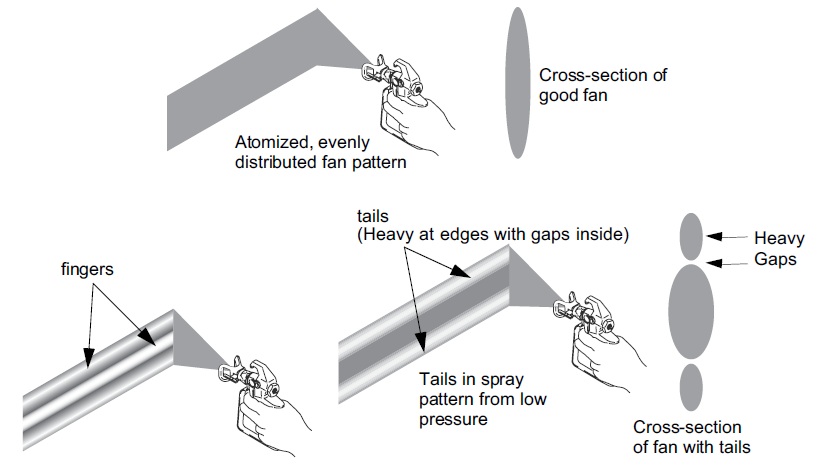
Note: If the maximum pressure of the sprayer is not sufficient to produce a proper spray pattern, a spray tip with a smaller orifice should be used. To check spray quality, apply test patterns onto scrap cardboard or other disposable material.
Aiming the Spray Pattern
Hold the spray gun approximately 12 inches (30.5 cm) from the surface and aim it directly at the surface, both horizontally and vertically. Larger spray tips may require greater distance to achieve an optimal spray pattern.
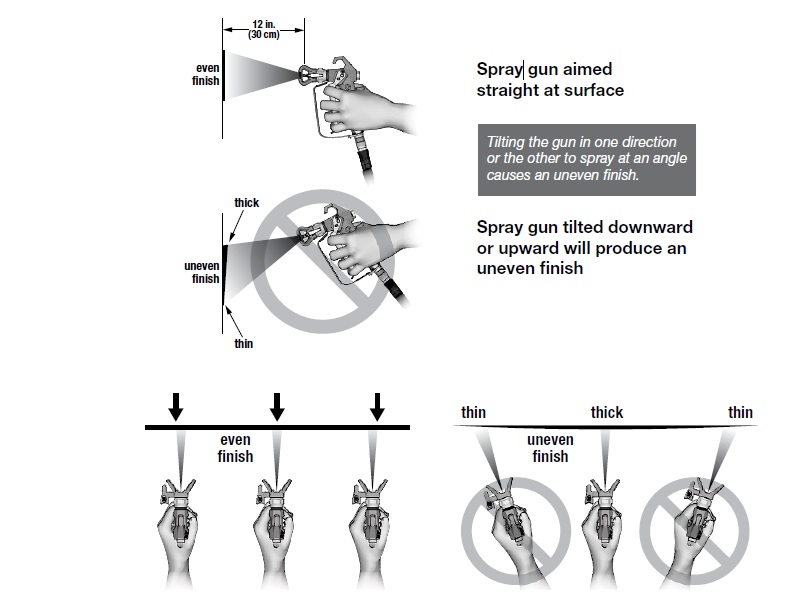
The spray gun should travel across the surface with the wrist flexed, ensuring the spray remains perpendicular to the work area. Avoid “fanning” or angling the spray, as this will result in an uneven or inconsistent finish.
Triggering Technique
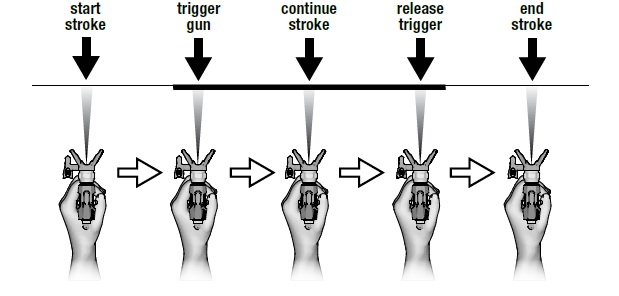
Trigger the spray gun only after the stroke has started (known as the lead stroke) and release the trigger just before completing the stroke (known as the lag stroke). The gun should stay in motion during both the trigger pull and release. This method helps prevent heavy paint buildup or thick spots at the beginning and end of each pass. To get the best Airless Spray Gun with Nozzle
Overlapping Technique
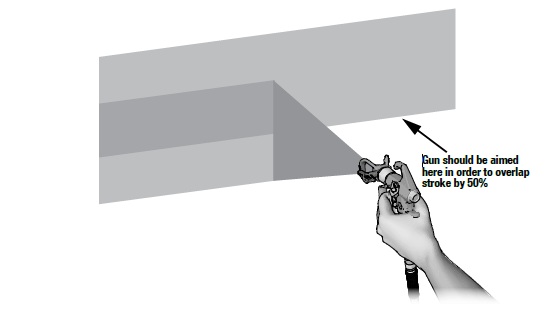
This method ensures an even and consistent coating across the surface. The spray gun should be aimed so that the spray pattern aligns with the edge of the previous pass, overlapping each stroke by approximately 50%.
When spraying large or open areas such as ceilings or unfinished walls, it is most efficient to begin with the outer edges first. Once the perimeter is coated, the centre area can be sprayed more quickly with broader, less precise passes while still maintaining proper overlap.
Painting Inside Corners
When spraying corners, the spray gun should be aimed directly into the corner and moved along its length. Avoid spraying back and forth across the corner, as this can lead to excessive paint buildup and an uneven finish.
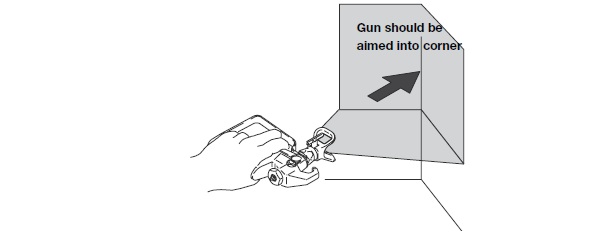
Controlling Coating Thickness
(Mil Build: 1 mil = 0.001 in)
Consistent coating thickness is key to achieving proper coverage and a professional finish. Follow these guidelines to control the film build effectively:
General Rules
Do not adjust pressure to change film thickness.
The pressure should only be adjusted to achieve a clean, fully atomized spray pattern at the lowest possible setting.
If the Coating Is Too Thick or Begins to Run
Try one or more of the following adjustments:
- Move the spray gun faster.
- Use a spray tip with a smaller orifice (ensure the sprayer can handle the tip size).
- Use a tip with a wider fan pattern.
- Ensure the spray gun is the proper distance from the surface—approximately 12 inches (30 cm).
If the Coating Is Too Thin or Not Fully Covering
Try one or more of these adjustments:
- Move the spray gun more slowly.
- Use a larger spray tip.
- Use a tip with a narrower fan.
- Ensure the gun is close enough to the surface—about 12 inches (30 cm).
- Common Spray Technique Mistakes
- Pressure Set Too High
- Turning the pressure to the maximum may seem easier, but it leads to poor results. Instead, adjust the pressure as low as possible without creating tails in the spray pattern.
Benefits of using the correct lower pressure include:
- Reduced wear on the spray pump
- Longer spray tip lifespan
- A more consistent, even finish
- Less overspray and wasted paint
- Holding the Trigger Too Long
Spraying continuously while moving back and forth without releasing the trigger can cause excessively thick areas, especially where the spray direction changes.
To avoid this:
- Trigger the gun after beginning each stroke.
- Release the trigger before the stroke ends.
- Always move the gun while squeezing and releasing the trigger.
- Neglecting this technique can result in visible heavy spots, especially under lighting or over time.